
The First Dinosaur
Live With Dinosaurs: 30 Days in the Lost World — Episode 2

Day 2: Face-to-face with extinction
The first thing Alex Carter noticed when he woke up was the silence.
No birds called from the trees. No insects buzzed among the leaves. Even the distant sounds of the river seemed to have disappeared.
For a few seconds, he remained inside the narrow rocky crevice, listening carefully.
Then he remembered the amber eyes he had seen in the darkness the previous night.
Alex immediately switched on his flashlight.
The beam swept across the stone walls, revealing scattered bones, deep scratches, and a narrow tunnel that disappeared beneath the mountain. Whatever had been watching him had vanished.
He waited several minutes before crawling toward the entrance.
Outside, pale morning sunlight filtered through the thick jungle canopy. The air was cool and damp, and mist drifted between the enormous trees. Broken branches lay scattered across the ground where the Tyrannosaurus rex had searched for him during the night.
Alex slowly stepped out of the crevice.
His clothes were torn, his arms were scratched, and his ribs still hurt from the helicopter crash. His camera had survived, but the lens was covered in mud. He wiped it with his sleeve and checked the remaining battery.
Thirty-seven percent.
He had no idea when he would be able to charge it again.
His satellite phone remained broken, and he had not heard from Daniel or Michael since the crash.
Alex needed water, shelter, and a way to contact the outside world. Most importantly, he needed to understand what kind of place he had landed in.
He adjusted his backpack and started walking toward the river.
He had no idea that the forest was already watching him.
The trail through the ancient jungle

The river was the only reliable landmark Alex remembered from the previous day. If he followed its course, he might eventually reach the coastline and find a way to signal a passing aircraft.
He moved carefully through the undergrowth, avoiding patches of soft mud and stepping over fallen trunks. Giant ferns towered above his head, while twisted vines hung from trees with enormous, unfamiliar leaves.
Every few minutes, he stopped to photograph something unusual.
A cluster of blue mushrooms glowed faintly beneath a fallen log. A strange insect with transparent wings crawled along a branch. Far above him, the silhouette of a large flying reptile crossed a narrow opening in the canopy.
Alex had studied prehistoric animals for years, but seeing creatures like these in the wild was different from examining fossils in a museum.
He began to wonder whether the island had somehow preserved an ancient ecosystem.
The idea seemed impossible.
Dinosaurs had dominated Earth millions of years before humans existed. Yet the footprints, the enormous predator, and the unfamiliar animals he had witnessed were difficult to explain any other way.
He opened his notebook and wrote:
Day 2.
The island contains unidentified wildlife. Large three-toed tracks suggest a massive bipedal animal. Possible prehistoric species. Further observation required.
He paused, then added another sentence.
If these are dinosaurs, the scientific consequences would be extraordinary.
A sudden movement caught his attention.
Something had passed between two trees ahead.
Alex raised his camera.
"Hello?" he called.
His voice sounded strangely small beneath the towering canopy.
No answer came.
He waited, then continued along the trail.
A few minutes later, he discovered several broken branches hanging from a tree nearly twice his height. The wood appeared to have been snapped recently, and deep scratches marked the bark.
Below them, the ground was covered with large footprints.
Alex crouched beside the nearest one.
It was the same three-toed shape he had discovered near the helicopter wreckage, but these prints were deeper and more clearly defined. They continued along the trail toward the river.
He followed them with his eyes.
Then he noticed something disturbing.
The footprints were heading in the same direction he was going.
Whatever had made them was somewhere ahead.
When the jungle fell silent
Alex heard the river before he saw it.
Water rushed over rocks beyond a dense wall of vegetation, and the sound brought him a small measure of relief. He was nearly out of drinking water, and the river might offer a chance to refill his bottle after he found a suitable spot away from dangerous animals.
He pushed aside a broad fern and stepped into a clearing.
Then he stopped.
A moment earlier, the jungle had been filled with the calls of birds and the rustling of small animals.
Now everything was silent.
Alex stood perfectly still.
A drop of water slid from a leaf and landed on his wrist. Somewhere in the distance, a branch creaked under an unseen weight.
He slowly turned his head toward the trees on his left.
Nothing.
He looked toward the river.
Nothing there, either.
Then came a deep, resonating sound.
THUD.
Alex felt the ground vibrate beneath his boots.
Another step followed.
THUD.
The sound came from the forest ahead.
He instinctively backed away, his hand tightening around the strap of his camera.
A group of small animals suddenly burst from the undergrowth and raced across the clearing. Several flying reptiles launched themselves from the treetops, beating their wings frantically as they fled toward the distant cliffs.
Something was coming.
Something large enough to frighten everything else in the forest.
Alex moved behind a thick tree trunk and peered around its side.
The branches ahead began to shake.
A low growl rolled through the jungle.
Then a massive head emerged from the shadows.
Alex forgot how to breathe.
The king of the lost world

The creature stood taller than the surrounding ferns, its enormous skull moving slowly from side to side as it surveyed the clearing.
Its skin was a mixture of dark green, brown, and charcoal gray. Old scars crossed its powerful neck, and its muscular tail extended behind it like a massive counterweight. Two tiny forelimbs hung beneath its chest, while its thick hind legs pressed deep impressions into the soft earth.
Its mouth opened slightly.
Rows of pointed teeth glistened in the morning light.
Alex knew what he was looking at.
A Tyrannosaurus rex.
For years, he had seen reconstructed skeletons of the animal in museums. He had watched documentaries describing its enormous bite force, powerful legs, and position near the top of the prehistoric food chain.
But none of those images had prepared him for the reality of standing in the same clearing as a living animal.
The dinosaur was not a skeleton.
It was breathing.
Its chest rose and fell with every slow breath. Moisture gathered around its nostrils, and its heavy feet crushed plants beneath their weight.
Alex could hear it sniffing the air.
He carefully lowered himself behind the tree, trying to make himself as small as possible.
He knew that a T. rex was a fictional impossibility on a modern island, but the animal in front of him looked terrifyingly real.
His mind raced through everything he knew about predators.
Do not approach.
Do not provoke it.
Find cover.
Above all, do not make yourself an easy target.
The dinosaur took another step.
Its enormous head moved toward the river, and Alex briefly wondered whether it had come to drink.
Then the animal stopped.
It lifted its snout and sniffed the air.
Alex held his breath.
The T. rex slowly turned its head toward his hiding place.
For several seconds, its gaze remained fixed on the tree.
Alex could not tell whether it had actually seen him.
He began to retreat, moving one foot at a time toward the rocks behind him.
His backpack brushed against a low branch.
The branch shook.
His camera strap slipped from his shoulder.
Before he could catch it, the camera struck a rock with a sharp crack.
The sound echoed through the clearing.
The dinosaur's head snapped toward him.
Its eyes locked onto the movement behind the tree.
A deep growl vibrated through its chest.
Alex froze.
Then the T. rex roared.
The chase

The roar was deafening.
Alex felt the sound in his bones. Birds exploded from the treetops, and a flock of flying reptiles scattered across the clearing.
The dinosaur charged.
Alex turned and ran.
He sprinted through the undergrowth, crashing through ferns and jumping over fallen branches. His backpack slammed against his shoulders, and pain shot through his injured ribs.
Behind him, the T. rex tore through the jungle.
The ground shook with every stride.
Alex glanced over his shoulder and immediately regretted it.
The predator was much closer than he had imagined.
Its enormous jaws opened as it lunged through a cluster of trees, snapping branches like dry sticks.
Alex forced himself to look forward.
Ahead, two enormous boulders stood beside a steep rock face. A narrow opening separated them, barely wide enough for a human to squeeze through.
It was his only chance.
He ran toward it.
His boot slipped in the mud, and he nearly fell. He caught himself against a tree trunk and pushed forward, ignoring the sharp pain in his side.
The dinosaur roared again.
Alex reached the rocks and turned sideways, squeezing his shoulders through the opening.
His backpack caught against the stone.
He pulled hard.
The fabric tore, and the bag slipped free.
Alex stumbled into the darkness just as the T. rex lunged at the entrance.
Its jaws snapped shut inches from his leg.
The impact shook the boulders.
Alex fell onto the rocky floor, scraping his hands and knees. He scrambled backward until the passage narrowed and the dinosaur could no longer reach him.
Outside, the predator roared in frustration.
Alex pressed himself against the cold stone wall.
He clamped one hand over his mouth to keep his breathing quiet.
The T. rex paced outside the entrance. He could hear its heavy footsteps, the scrape of its claws against the rocks, and the occasional snort as it searched for him.
A shadow passed across the opening.
Alex did not move.
Minutes crawled by.
Eventually, the footsteps began to fade.
The jungle slowly returned to life, but Alex remained hidden until he could no longer hear the dinosaur nearby.
Only then did he allow himself to breathe normally.
He had survived.
Barely.
A footprint that changed everything
Alex waited another ten minutes before approaching the entrance.
He peered outside.
The clearing appeared empty.
The T. rex had disappeared into the jungle, leaving crushed ferns and broken branches in its wake. Several deep footprints marked the muddy ground, leading away from the boulders.
Alex cautiously stepped outside.
His camera lay near the tree where he had dropped it. He retrieved it, checked the lens, and discovered a long scratch across the casing. Fortunately, the device still powered on.
He then searched the ground for his backpack.
It had been dragged several meters during the chase and was partly buried beneath a layer of leaves. One strap was torn, and a water bottle had cracked, but his first-aid kit and notebook remained intact.
His food supplies were scattered across the mud.
He collected what he could and began checking the area for a safe route away from the clearing.
That was when he noticed the footprints.
The T. rex's tracks were unmistakable: enormous three-toed impressions pressed deeply into the wet earth.
But beside one of the larger prints was another track.
A much smaller one.
Alex crouched down.
The smaller footprint was only a fraction of the size of the adult's. Its toes were narrow, and the marks were less deeply impressed in the mud.
He followed the trail with his eyes.
The smaller tracks crossed the larger ones, then continued toward the forest.
Alex took photographs of both sets.
His pulse quickened.
The T. rex had not been alone.
A juvenile dinosaur might be living nearby. Perhaps the smaller animal belonged to the same species. Perhaps the adult was protecting its young.
The thought made the encounter even more frightening.
If the adult was a parent, it might be particularly aggressive toward anything that approached its offspring.
Alex stood slowly and scanned the surrounding vegetation.
The forest was thick, and visibility extended only a few meters between the trees.
He could not see anything moving.
Then he noticed a broken fern near the edge of the clearing.
Its leaves were still trembling.
Something had passed through the vegetation only moments earlier.
Alex raised his camera and zoomed in.
At the edge of the forest, a small shape moved behind a tree trunk.
It was too far away to identify clearly.
But it was watching him.
The sound from the forest
Alex backed toward the rocks, keeping his eyes on the distant movement.
He knew he should leave the area immediately. If a young dinosaur was nearby, staying in the clearing could bring the adult predator back.
He carefully stepped onto a narrow trail leading away from the river.
Every few meters, he stopped to listen.
The jungle seemed different now. Every rustling leaf sounded suspicious. Every distant cry made him turn around.
He had spent years photographing wildlife from safe distances, often waiting patiently for hours to capture a single perfect image.
Today, he understood the difference between observing a predator and becoming its prey.
He reached a patch of high ground where the trees opened slightly, revealing the distant northern mountains.
A thin column of smoke rose from somewhere beyond the valley.
Alex stared at it.
It could have come from a natural fire, but its position seemed strangely precise. It rose from a point near the mountains where the blue light had appeared the previous day.
He took a photograph.
Then he heard a faint chirping sound behind him.
He turned.
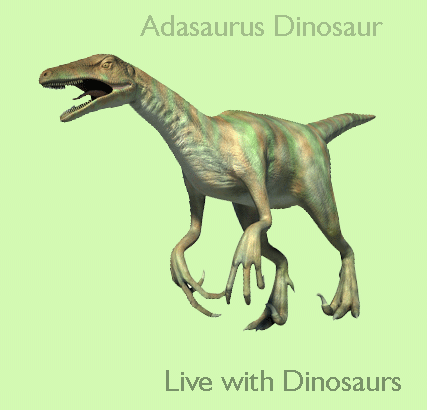
A small dinosaur stood among the ferns.
It was no taller than his waist, with slender legs, a narrow snout, and tiny forelimbs. Its body was covered in fine, downy feathers, and its large eyes reflected the sunlight.
The creature tilted its head.
Alex remained still.
The young dinosaur took one cautious step forward.
Then another.
For a moment, Alex forgot the terror of the chase. He had never seen anything so extraordinary.
The animal made another soft chirp and lowered its head toward the ground.
Alex slowly reached for his camera.
The young dinosaur suddenly lifted its head.
Its body stiffened.
It stared past Alex, toward the trees behind him.
Then it gave a sharp, frightened cry.
Alex turned around.
The forest was silent.
But from somewhere deep within it came a sound that made his blood run cold.
ROOOOOOOAAAAARRR!
The T. rex had returned.
And this time, the roar sounded much closer.
The young dinosaur bolted into the undergrowth.
Alex ran toward the rocky trail, but before he could reach it, a massive shadow appeared between the trees.
The predator was heading directly toward the smaller animal.
Alex stopped.
He now understood the strange footprints.
The smaller dinosaur had not simply crossed the adult's trail.
It had been running from something.
And the enormous predator was hunting it.
Cliffhanger: Where is the mother?
Alex ducked behind a fallen tree as the T. rex entered the clearing.
The young dinosaur's cries echoed from the forest ahead.
The predator paused, lifted its head, and sniffed the air.
Then it moved toward the sound.
Alex remained hidden, his camera clutched tightly in his hands.
He could flee while the dinosaur was distracted. He should flee.
But as he watched the enormous animal disappear between the trees, he noticed something else.
Several smaller footprints emerged from the opposite side of the clearing.
They led toward a narrow valley beneath the northern mountains.
There were too many tracks for a single young dinosaur.
Dozens of them.
Some were fresh. Others had been pressed into the mud days earlier.
Alex slowly raised his camera and photographed the trail.
The island was not home to one surviving dinosaur.
It contained an entire population.
Somewhere beyond the valley, other creatures were living, feeding, nesting, and raising their young in a world that modern science believed had disappeared millions of years ago.
Then a second roar echoed from the mountains.
It was deeper than the first.
The T. rex in the clearing suddenly stopped moving.
For the first time, the enormous predator appeared frightened.
It turned toward the northern valley and released a low, uneasy growl.
Alex watched as it backed away from the trail.
Whatever had produced that second roar was powerful enough to frighten the king of the island.
Alex looked toward the mountains.
The smoke column had grown larger, and the strange blue light was beginning to glow between the distant peaks.
He tightened the straps of his damaged backpack.
He needed to find Daniel and Michael. He needed to contact the outside world.
But now he had another question.
If a T. rex was afraid of something in the northern valley, what kind of creature could possibly be more dangerous?
Alex took one last photograph of the footprints and started walking toward the mountains.
He had come to the island to photograph wildlife.
Now he was beginning to understand that the island was not simply a lost prehistoric paradise.
It was hiding something.
And whatever that something was, it had just awakened.
TO BE CONTINUED…
Episode 3: The Valley of Giants — Alex discovers a breathtaking prehistoric valley, encounters a herd of gentle giants, and learns why every dinosaur on the island is fleeing from the northern mountains.





0 Comments